Thursday, 17 December 2015

MediaTek announces open-source development platform for IoT devices

MediaTek Labs has announced the launch of the MediaTek LinkIt Smart 7688, a development platform enabling rapid development of advanced Wi-Fi based devices such as IP cameras, surveillance devices, smart appliances and Wi-Fi gateways that make use of cloud services.

Two versions of the platform's hardware development kit (HDK) are available: the LinkIt Smart 7688, which includes a microprocessor unit (MPU) based on the MediaTek MT7688AN system-on-chip (SOC), and the LinkIt Smart 7688 Duo, which in addition to the MPU includes a microcontroller unit (MCU) and is Arduino compatible. Both development boards feature built-in Wi-Fi, 128MB RAM and 32MB flash, and a wide variety of options for connecting peripherals.

The MediaTek LinkIt Smart 7688 and 7688 Duo development boards are available to ship globally. The LinkIt Smart 7688 costs US$12.90, while the LinkIt Smart 7688 Duo costs US$15.90. A fully open-source version of the Wi-Fi driver is in development and expected to be made available by MediaTek Labs in the coming months, the company added. 

"MediaTek Labs is focused on stimulating innovation in IoT and is pleased to extend its LinkIt family of development platforms to the open-source and web developer communities, enabling broader product development for a more connected world," said Marc Naddell, VP of MediaTek Labs. 

"The new LinkIt Smart 7688 development platform will appeal to a wide range of developers because of its open-source software compatibility, support for several popular programming languages and use of Linux."
   Posted on  Thursday, December 17, 2015  / 

MediaTek Labs has announced the launch of the MediaTek LinkIt Smart 7688, a development platform enabling rapid development of advanced Wi-Fi based devices such as IP cameras, surveillance devices, smart appliances and Wi-Fi gateways that make use of cloud services.

Two versions of the platform's hardware development kit (HDK) are available: the LinkIt Smart 7688, which includes a microprocessor unit (MPU) based on the MediaTek MT7688AN system-on-chip (SOC), and the LinkIt Smart 7688 Duo, which in addition to the MPU includes a microcontroller unit (MCU) and is Arduino compatible. Both development boards feature built-in Wi-Fi, 128MB RAM and 32MB flash, and a wide variety of options for connecting peripherals.

The MediaTek LinkIt Smart 7688 and 7688 Duo development boards are available to ship globally. The LinkIt Smart 7688 costs US$12.90, while the LinkIt Smart 7688 Duo costs US$15.90. A fully open-source version of the Wi-Fi driver is in development and expected to be made available by MediaTek Labs in the coming months, the company added. 

"MediaTek Labs is focused on stimulating innovation in IoT and is pleased to extend its LinkIt family of development platforms to the open-source and web developer communities, enabling broader product development for a more connected world," said Marc Naddell, VP of MediaTek Labs. 

"The new LinkIt Smart 7688 development platform will appeal to a wide range of developers because of its open-source software compatibility, support for several popular programming languages and use of Linux."

Tuesday, 27 October 2015

Xiaomi Linux Laptop To Enter Production Early Next Year

Xiaomi’s long-rumoured Linux laptop will enter production in the first part of 2016, a new report claims.
Industry watcher Digitimes’ sources also reveal that China’s Xiaomi plans to launch two notebooks: one sporting a 12.5-inch display and another with a 13.3-inch display.
A difference in screen size is not the only distinction as each device will be made by a separate ODM:
The model with a 12.5-inch screen will be manufactured by Inventec (who make laptops for Acer, Toshiba and HP), with an initial order of 250,000 units.
The slightly larger device is to be made by Compal Electronics (known for manufacturing Apple devices, and various PlayStation, Xbox and Nintendo games consoles), with Xiaomi placing an order for 300,000 units.
Industry analysts say Xiaomi is now the world’s third biggest smartphone vendor – but Xiaomi is much more than a smartphone maker.
It also makes the world’s second most popular wearable device, the Mi Band, and offers Smart TVs, routers, IoT home products and even an air purifier – ! – as part of its ‘lifestyle strategy’.
It’s very much a case of when Xiaomi makes a laptop, not if.
Manufacturing sources speaking to Digitimes earlier in the year said the company was developing a 15.6-inch notebook with its ODM partners. No firm production plans were set at the time.
Now those sources claim there are two laptops, neither of which is 15-inch in size, but production of which is to commence in the first half of 2016.
‘Xiaomi is considering selling its new notebooks as part of a smartphone bundle’
The manufacture and design of electronics is always subject to change and revision. What a source hears one month can be contradicted a few weeks later as component costs fluctuate, manufacturing availability changes, and market trends prompt a rethink.
With word of the Xiaomi laptop entering production, it’s clear a direction has now been settled on.
Xiaomi’s notebooks will, according to the same sources, be priced cheaply but offer high performance, just like the company’s smartphones.
In fact, Xiaomi is said to be considering selling its new notebooks as a bundle with a new smartphone – a way to not only reinforce its overall lifestyle strategy, but ensure its new notebooks get off to a stellar start.
And with a new, untested Linux-based OS onboard, it may well need the push.
If anyone stands a chance of taking Linux mainstream in China it’s Xiaomi.
   Posted on  Tuesday, October 27, 2015  / 

Xiaomi’s long-rumoured Linux laptop will enter production in the first part of 2016, a new report claims.
Industry watcher Digitimes’ sources also reveal that China’s Xiaomi plans to launch two notebooks: one sporting a 12.5-inch display and another with a 13.3-inch display.
A difference in screen size is not the only distinction as each device will be made by a separate ODM:
The model with a 12.5-inch screen will be manufactured by Inventec (who make laptops for Acer, Toshiba and HP), with an initial order of 250,000 units.
The slightly larger device is to be made by Compal Electronics (known for manufacturing Apple devices, and various PlayStation, Xbox and Nintendo games consoles), with Xiaomi placing an order for 300,000 units.
Industry analysts say Xiaomi is now the world’s third biggest smartphone vendor – but Xiaomi is much more than a smartphone maker.
It also makes the world’s second most popular wearable device, the Mi Band, and offers Smart TVs, routers, IoT home products and even an air purifier – ! – as part of its ‘lifestyle strategy’.
It’s very much a case of when Xiaomi makes a laptop, not if.
Manufacturing sources speaking to Digitimes earlier in the year said the company was developing a 15.6-inch notebook with its ODM partners. No firm production plans were set at the time.
Now those sources claim there are two laptops, neither of which is 15-inch in size, but production of which is to commence in the first half of 2016.
‘Xiaomi is considering selling its new notebooks as part of a smartphone bundle’
The manufacture and design of electronics is always subject to change and revision. What a source hears one month can be contradicted a few weeks later as component costs fluctuate, manufacturing availability changes, and market trends prompt a rethink.
With word of the Xiaomi laptop entering production, it’s clear a direction has now been settled on.
Xiaomi’s notebooks will, according to the same sources, be priced cheaply but offer high performance, just like the company’s smartphones.
In fact, Xiaomi is said to be considering selling its new notebooks as a bundle with a new smartphone – a way to not only reinforce its overall lifestyle strategy, but ensure its new notebooks get off to a stellar start.
And with a new, untested Linux-based OS onboard, it may well need the push.
If anyone stands a chance of taking Linux mainstream in China it’s Xiaomi.

Thursday, 27 August 2015

97% Of Engineers In India Can’t Speak English; Less Than 20% Are Employable For IT Jobs

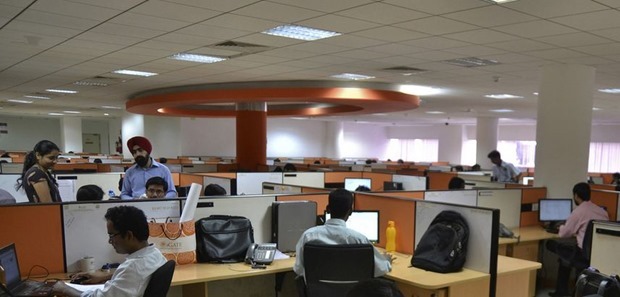
Indian IT engineers
In India, around 600,000 engineers graduate annually from various colleges; while some of them chose the profession because of their engineering passion, some of them were pressurized from their parents.
But a new study has revealed that most of them aren't even qualified for a job in knowledge economy.
Aspiring Minds, a leading employability credentialing firm, has revealed that only 18.43% of all engineering graduates are eligible for a software engineer's job in India.
And the worst part is that such incompetency has nothing to do with their engineering skills: its their proficiency in English language & soft skills which makes them lose out on opportunities.
As Per their study, 97% of Indians engineers cannot speak English,which is one of the mandatory requirement for working in any software or IT firm. In fact, 67% of all engineers do not possess any English language skills (reading, speaking, comprehension), which are required for high-end job in business consulting, software, IT and other knowledge economy jobs.
It is a shocking reality indeed, which can have major implications on the current job market in the country.
These results were derived from two studies: 
a) ‘The National Spoken English Skills of Engineers Report’, where in English language skills were tested on 30,000 would be engineers from 500 engineering colleges across the nation
b) ‘National Employability Report for Engineering Graduates’, where in 1.2 lakh engineering students from 520 engineering colleges were surveyed for employability skills (which included logic, aptitude and more tests besides English language). This particular test was conducted on those students who passed out in 2013

Interesting facts from these studies:
  • 91.82% of the students lacked programming and algorithm related skills
  • 71.23% of the students lacked soft and cognitive skills
  • 60% of the students lack domain skills (example civil engineering, mechanical engineering etc)
  • 97% of the students cannot speak English which is required for getting a IT job
  • 57.96% of students lacked analytical and quantitative skills
  • 61% of students possess grammar skills which is almost equal to a class 7thstudent
  • Only 7.1% of students can speak English which is considered as meaningful, and presentable during an interview
  • The major problem was witnessed with pronunciation, followed by fluency skills, grammar and sentence construction. Understanding spoken English and vocabulary showcased less problems
  • Girls had better command over written English, while men were more proficient with spoken English (comparably)
Providing a possible explanation for these shocking results, Aspiring Minds CEO & Co-founder Himanshu Aggarwal said, “The low employability among engineering graduates is a cumulative outcome of poor education standards and higher demand of skilled employees thereby creating a drastic skill gap in the country,”
If we are assuming that this problem mainly exists in students from Tier 2 colleges, then we are wrong here. Even IITs and NITs are not spared, when it comes to English language skills.
Gautam Biswas, director, IIT Guwahati said, “We get students from different backgrounds and regions, and they are mostly not comfortable with English. Quite a few students appear for the joint entrance examination in their mother tongue. It becomes very difficult for them to follow the curriculum.”
Have we put too much focus on Maths, Science and Biology that we have left our students paralyzed when it comes to soft skills and English language proficiency?
UB Desai who is the director of IIT Hyderabad certainly thinks so. He said, “Over the years, the focus in the education system has shifted to chemistry, maths, physics. Focus on soft skills has reduced. Students may lose out on good job prospects as many companies come to campuses for global positions as well,”
As per Aspiring Minds, a fresher can easily lose 30-50% of salary, in case his English language and soft skills are below expectations.
[Sources: 123 | Image: WSJ]
"97% Of Engineers In India Can’t Speak English; Less Than 20% Are Employable For Software Jobs"1 out of 5 based on 23 ratings.
   Posted on  Thursday, August 27, 2015  / 

Indian IT engineers
In India, around 600,000 engineers graduate annually from various colleges; while some of them chose the profession because of their engineering passion, some of them were pressurized from their parents.
But a new study has revealed that most of them aren't even qualified for a job in knowledge economy.
Aspiring Minds, a leading employability credentialing firm, has revealed that only 18.43% of all engineering graduates are eligible for a software engineer's job in India.
And the worst part is that such incompetency has nothing to do with their engineering skills: its their proficiency in English language & soft skills which makes them lose out on opportunities.
As Per their study, 97% of Indians engineers cannot speak English,which is one of the mandatory requirement for working in any software or IT firm. In fact, 67% of all engineers do not possess any English language skills (reading, speaking, comprehension), which are required for high-end job in business consulting, software, IT and other knowledge economy jobs.
It is a shocking reality indeed, which can have major implications on the current job market in the country.
These results were derived from two studies: 
a) ‘The National Spoken English Skills of Engineers Report’, where in English language skills were tested on 30,000 would be engineers from 500 engineering colleges across the nation
b) ‘National Employability Report for Engineering Graduates’, where in 1.2 lakh engineering students from 520 engineering colleges were surveyed for employability skills (which included logic, aptitude and more tests besides English language). This particular test was conducted on those students who passed out in 2013

Interesting facts from these studies:
  • 91.82% of the students lacked programming and algorithm related skills
  • 71.23% of the students lacked soft and cognitive skills
  • 60% of the students lack domain skills (example civil engineering, mechanical engineering etc)
  • 97% of the students cannot speak English which is required for getting a IT job
  • 57.96% of students lacked analytical and quantitative skills
  • 61% of students possess grammar skills which is almost equal to a class 7thstudent
  • Only 7.1% of students can speak English which is considered as meaningful, and presentable during an interview
  • The major problem was witnessed with pronunciation, followed by fluency skills, grammar and sentence construction. Understanding spoken English and vocabulary showcased less problems
  • Girls had better command over written English, while men were more proficient with spoken English (comparably)
Providing a possible explanation for these shocking results, Aspiring Minds CEO & Co-founder Himanshu Aggarwal said, “The low employability among engineering graduates is a cumulative outcome of poor education standards and higher demand of skilled employees thereby creating a drastic skill gap in the country,”
If we are assuming that this problem mainly exists in students from Tier 2 colleges, then we are wrong here. Even IITs and NITs are not spared, when it comes to English language skills.
Gautam Biswas, director, IIT Guwahati said, “We get students from different backgrounds and regions, and they are mostly not comfortable with English. Quite a few students appear for the joint entrance examination in their mother tongue. It becomes very difficult for them to follow the curriculum.”
Have we put too much focus on Maths, Science and Biology that we have left our students paralyzed when it comes to soft skills and English language proficiency?
UB Desai who is the director of IIT Hyderabad certainly thinks so. He said, “Over the years, the focus in the education system has shifted to chemistry, maths, physics. Focus on soft skills has reduced. Students may lose out on good job prospects as many companies come to campuses for global positions as well,”
As per Aspiring Minds, a fresher can easily lose 30-50% of salary, in case his English language and soft skills are below expectations.
[Sources: 123 | Image: WSJ]
"97% Of Engineers In India Can’t Speak English; Less Than 20% Are Employable For Software Jobs"1 out of 5 based on 23 ratings.

Sunday, 23 August 2015

5 Lies Gnu/Linux-Haters Like To Tell


Gnu/Linux is the Voldemort of computers. You speak its name and everyone cowers in the corner, fearful of the pain and suffering it might bring. The thing is, Gnu/Linux may have been a scary operating system before, but all of that has changed in recent years. These myths, which are more accurately called lies, are now dead.
Lie #1: Gnu/Linux Is Too Difficult
linux-lies-debunked-difficult-learning-curve
Out of all arguments against using Gnu/Linux, this one is the most common. In past articles, we’ve even inadvertently implied that “Gnu/Linux is too difficult to learn” without even realizing it. The veracity of the statement, however, depends entirely on the definition of “too difficult” because it could be true in some ways and false in others.
Is Gnu/Linux difficult in an absolute sense? No, not really. In fact, if you really look at it from an objective standpoint, it’s arguably the most logical operating system out there. If you want to do something, you just need to learn the right commands and parameters.
When coming from a blank slate, the hardest part of Gnu/Linux is learning the sheer depth of commands. Thankfully, the man command (i.e. “manual”) tells you everything you need to know about any command. That being said, Gnu/Linux newbies should first get started with these 50 essential Gnu/Linux commands
But the reality is that most Gnu/Linux newbies aren’t coming from a blank slate; they’re coming from Windows or Mac. If a user comes to Gnu/Linux expecting it to behave like another operating system, yes, it will be difficult and frustrating. However, if Gnu/Linux is treated as it should be – a unique operating system with its own design and behaviors – then it won’t be so tough to grasp.

Lie #2: Gnu/Linux Is Old And Ugly

linux-lies-debunked-ugly-old
Most first impressions of Gnu/Linux aren’t too great, at least when it comes to aesthetics. Those who have never touched Gnu/Linux probably imagine it to be nothing more than neon green text on a black background. Those who tried Gnu/Linux many years ago probably remember the clunky graphics of older versions of Gnome and KDE.
Gnu/Linux may have been ugly back in the day, but things are different now.
One thing to understand is that the Gnu/Linux frontend (desktop, windows, animations) are decoupled from the Gnu/Linux backend (the actual cogs of the operating system). There are multiple frontends, called desktop environments, and you can switch between them if you want. This may be a foreign concept for those who are used to Windows and Mac.
Gnu/Linux has best desktop environments and each one offers a unique set of benefits. Some optimize performance while others aim for maximum eye candy. Check out Unity, the default desktop environment for Ubuntu, for proof that not all Gnu/Linux environments have to be sterile and outdated.

Lie #3: You Must Use the Command Line

linux-lies-debunked-command-line
Let’s go back to the idea of green text on a black background. The Gnu/Linux stereotype is one of a basement hacker with thick glasses who types frantically on a command line, which is properly known as a terminal. As a result, most people are under the impression that Gnu/Linux is 99% keyboard.
Not true at all.
The desktop environments mentioned in Lie #2 are just like the graphic environments of Windows and Mac. You can navigate files and folders with your mouse if you want. In fact, it’s entirely possible to use Gnu/Linux without ever touching the terminal. Perhaps that was true at some point in history, but it hasn’t been like that for a long time.
However, there is a slight caveat. If you ever run into issues, they’ll be easier to solve if you have some knowledge of the command line. Indeed, if you want to unlock the full potential of Gnu/Linux, you have to learn Gnu/Linux Commands. For day-to-day use, you won’t need it; for anything deeper like want to become a sysadmin, you will.

Lie #4: You Must Build From Source

linux-lies-debunked-build-from-source
If you’ve ever downloaded a cross-platform program and looked under the Gnu/Linux section, you’ve probably noticed that Gnu/Linux downloads often come in source code while Windows and Mac typically come as binaries. One might conclude that Gnu/Linux requires the user to build all programs from source, but that’s not necessarily true.
Most distributions come with something called a package manager. In Gnu/Linux, a package is a collection of files and instructions which are interpreted by the package manager to show where and how those files should be unpacked. Long story short, packages can be used in a way similar to one-click installers.
Package managers have an additional benefit: they can tap into various online repositories full of different packages, which means that a manager can often be a one-stop-shop that provides quick installation of most available programs for your particular distribution of Gnu/Linux.
Lesser known programs may not be available in these repositories, however, and in those rare cases you may need to build said programs from source. As long as you stick to well-known programs, this may never be an issue for you.

Lie #5: Gnu/Linux Can’t Play Video Games

linux-lies-debunked-video-games
One reason why Windows continues to capture a huge share of the market is its de facto standard as “the operating system for gaming.” If you want to play the latest and greatest games, chances are you’ll need a Windows computer or you’ll be out of luck. But anyone who says that Gnu/Linux can’t play video games at all is a liar.
Many people don’t realize that there are several high profile games that can be played natively on Gnu/Linux. Some well-known titles include AmnesiaCivilization V,Dota 2, Half-Life series, World of Goo, but there are more. Combine that with the new Gnu/Linux releases by GOG and the recently released StemOS, which is a variant of Gnu/Linux that aims to support every game on the Steam platform, and you’ll see that gaming on Gnu/Linux has an interesting future.
There’s another option, too, and that’s Wine, which is “a free implementation of Windows” on Gnu/Linux. You can think of it as an emulator that’ll let you run Windows games on Gnu/Linux. Not every game will work this way and the games that do run might experience a performance hit. However, it’s a very real option that many use on a regular basis.
All Debunked: Got Any More Gnu/Linux Lies?
There you have it: five of the most common Gnu/Linux lies, debunked. What other Gnu/Linux lies or myths have you heard recently? Share them with us in the comments below and help debunk them! It’s about time that these falsehoods come to an end.

Image Credits: Frustrating Computer Via ShutterstockLinux Terminal Via ShutterstockSource Code Via ShutterstockGamer Behind Computer Via ShutterstockSource: Makeuseof.com
   Posted on  Sunday, August 23, 2015  / 


Gnu/Linux is the Voldemort of computers. You speak its name and everyone cowers in the corner, fearful of the pain and suffering it might bring. The thing is, Gnu/Linux may have been a scary operating system before, but all of that has changed in recent years. These myths, which are more accurately called lies, are now dead.
Lie #1: Gnu/Linux Is Too Difficult
linux-lies-debunked-difficult-learning-curve
Out of all arguments against using Gnu/Linux, this one is the most common. In past articles, we’ve even inadvertently implied that “Gnu/Linux is too difficult to learn” without even realizing it. The veracity of the statement, however, depends entirely on the definition of “too difficult” because it could be true in some ways and false in others.
Is Gnu/Linux difficult in an absolute sense? No, not really. In fact, if you really look at it from an objective standpoint, it’s arguably the most logical operating system out there. If you want to do something, you just need to learn the right commands and parameters.
When coming from a blank slate, the hardest part of Gnu/Linux is learning the sheer depth of commands. Thankfully, the man command (i.e. “manual”) tells you everything you need to know about any command. That being said, Gnu/Linux newbies should first get started with these 50 essential Gnu/Linux commands
But the reality is that most Gnu/Linux newbies aren’t coming from a blank slate; they’re coming from Windows or Mac. If a user comes to Gnu/Linux expecting it to behave like another operating system, yes, it will be difficult and frustrating. However, if Gnu/Linux is treated as it should be – a unique operating system with its own design and behaviors – then it won’t be so tough to grasp.

Lie #2: Gnu/Linux Is Old And Ugly

linux-lies-debunked-ugly-old
Most first impressions of Gnu/Linux aren’t too great, at least when it comes to aesthetics. Those who have never touched Gnu/Linux probably imagine it to be nothing more than neon green text on a black background. Those who tried Gnu/Linux many years ago probably remember the clunky graphics of older versions of Gnome and KDE.
Gnu/Linux may have been ugly back in the day, but things are different now.
One thing to understand is that the Gnu/Linux frontend (desktop, windows, animations) are decoupled from the Gnu/Linux backend (the actual cogs of the operating system). There are multiple frontends, called desktop environments, and you can switch between them if you want. This may be a foreign concept for those who are used to Windows and Mac.
Gnu/Linux has best desktop environments and each one offers a unique set of benefits. Some optimize performance while others aim for maximum eye candy. Check out Unity, the default desktop environment for Ubuntu, for proof that not all Gnu/Linux environments have to be sterile and outdated.

Lie #3: You Must Use the Command Line

linux-lies-debunked-command-line
Let’s go back to the idea of green text on a black background. The Gnu/Linux stereotype is one of a basement hacker with thick glasses who types frantically on a command line, which is properly known as a terminal. As a result, most people are under the impression that Gnu/Linux is 99% keyboard.
Not true at all.
The desktop environments mentioned in Lie #2 are just like the graphic environments of Windows and Mac. You can navigate files and folders with your mouse if you want. In fact, it’s entirely possible to use Gnu/Linux without ever touching the terminal. Perhaps that was true at some point in history, but it hasn’t been like that for a long time.
However, there is a slight caveat. If you ever run into issues, they’ll be easier to solve if you have some knowledge of the command line. Indeed, if you want to unlock the full potential of Gnu/Linux, you have to learn Gnu/Linux Commands. For day-to-day use, you won’t need it; for anything deeper like want to become a sysadmin, you will.

Lie #4: You Must Build From Source

linux-lies-debunked-build-from-source
If you’ve ever downloaded a cross-platform program and looked under the Gnu/Linux section, you’ve probably noticed that Gnu/Linux downloads often come in source code while Windows and Mac typically come as binaries. One might conclude that Gnu/Linux requires the user to build all programs from source, but that’s not necessarily true.
Most distributions come with something called a package manager. In Gnu/Linux, a package is a collection of files and instructions which are interpreted by the package manager to show where and how those files should be unpacked. Long story short, packages can be used in a way similar to one-click installers.
Package managers have an additional benefit: they can tap into various online repositories full of different packages, which means that a manager can often be a one-stop-shop that provides quick installation of most available programs for your particular distribution of Gnu/Linux.
Lesser known programs may not be available in these repositories, however, and in those rare cases you may need to build said programs from source. As long as you stick to well-known programs, this may never be an issue for you.

Lie #5: Gnu/Linux Can’t Play Video Games

linux-lies-debunked-video-games
One reason why Windows continues to capture a huge share of the market is its de facto standard as “the operating system for gaming.” If you want to play the latest and greatest games, chances are you’ll need a Windows computer or you’ll be out of luck. But anyone who says that Gnu/Linux can’t play video games at all is a liar.
Many people don’t realize that there are several high profile games that can be played natively on Gnu/Linux. Some well-known titles include AmnesiaCivilization V,Dota 2, Half-Life series, World of Goo, but there are more. Combine that with the new Gnu/Linux releases by GOG and the recently released StemOS, which is a variant of Gnu/Linux that aims to support every game on the Steam platform, and you’ll see that gaming on Gnu/Linux has an interesting future.
There’s another option, too, and that’s Wine, which is “a free implementation of Windows” on Gnu/Linux. You can think of it as an emulator that’ll let you run Windows games on Gnu/Linux. Not every game will work this way and the games that do run might experience a performance hit. However, it’s a very real option that many use on a regular basis.
All Debunked: Got Any More Gnu/Linux Lies?
There you have it: five of the most common Gnu/Linux lies, debunked. What other Gnu/Linux lies or myths have you heard recently? Share them with us in the comments below and help debunk them! It’s about time that these falsehoods come to an end.

Image Credits: Frustrating Computer Via ShutterstockLinux Terminal Via ShutterstockSource Code Via ShutterstockGamer Behind Computer Via ShutterstockSource: Makeuseof.com

Thursday, 20 August 2015

Facebook’s Predictive Analytics – A Love Story


Did you know that Facebook can look at its user’s posting patterns and moods in order to predict their future romantic relationships?


As a posting on the blog “Fierce Big Data” put it on February 19, 2014: “‘During the 100 days before the relationship starts, we observe a slow but steady increase in the number of timeline posts shared between the future couple,’ writes Facebook data scientist Carlos Diuk in his ‘The Formation of Love’ post.

‘When the relationship starts (day 0), posts begin to decrease. We observe a peak of 1.67 posts per day 12 days before the relationship begins, and a lowest point of 1.53 posts per day 85 days into the relationship. Presumably, couples decide to spend more time together, courtship is off and online interactions give way to more interactions in the physical world.’
Interesting….
Facebook As Cupid?
To put it another way, Facebook knows before you do when you are going to become a couple. It certainly knows long before you announce it on your relationship status.

What’s more, Facebook can tell when the physical part of your relationship begins because your online activity decreases. While Facebook diplomatically calls this phase “courtship” in the posts, but in reality the courtship actually occurred during the exchanges Facebook initially traced to accurately predict the relationship.
What value does tracking the love life of its users have for Facebook? Plenty! This information can be used to promote placement of marketing for everything from flowers to chocolates to condoms to lubricants and any other company that can profit from your being involved in a romantic and physical relationship.
Predicting Breakups
Facebook also can predict when your relationship is going to end – often before you do.
In a Facebook posting called “When Love Goes Awry,” which was published on the site on the day after Valentine’s Day, 2014, Facebook data scientist Adrien Figgeri wrote: “To conclude this week of celebrating love and looking at how couples blossom on Facebook, we felt it was important not to forget that unfortunately sometimes relationships go south and people take different paths in life. In this context, we were interested in understanding the extent to which Facebook provides a platform for support from loved ones after a breakup.”
“To that end, we studied a group of people who were on the receiving end of a separation, i.e. who had been in a relationship for at least four weeks with someone who then switched their relationship status to Single.”
“For every person in this group, we tracked a combination of the number of messages they sent and received, the number of posts from others on their timeline, and the number of comments from others on their own content, during a period starting a month before the separation to a month after.
“We observed a steady regime around the baseline before the day of the relationship status changes, followed by a discontinuity on that day with a +225% increase of the average volume of interactions which then gradually stabilize over the course of a week to levels higher to those observed pre-breakup.”
To translate, Facebook can accurately predict when your relationship is going to end long before you suspect anything is wrong. And you can be sure Facebook is using similar analysis to predict other intimate details about your life as well.

Facebook And The Possibilities Of Big Data  
Most people have no idea about Facebook’s date collection activities and data usage practices.Even if they have heard about it, they generally don’t care or see it as little more than a harmless annoyance. They mistakenly believe that as long as they don’t post anything of a highly personal or sensitive nature on their wall, Facebook’s practices can’t cause any harm to them.

Facebook isn’t alone in conducting wide-scale data harvesting. In fact, most corporations do it to some degree or another these days. While some of these efforts are indeed harmless, some are not. What's worse, at this point nobody knows how this data will be utilized in the future, or to whom it will be sold and for what purposes it is being purchased. Most people are legitimately concerned about the potential dangers of the government collecting large amounts of data on them, but they are blind to the dangers of private corporations doing the same thing.

This is a perfect example of how limited perception based on an individual's personal experience can cause ambiguity in the discussion of big data within and organization.
But Facebook's use of data offers an excellent opportunity to illustrate what is possible with big data, as well as what some of the potential dangers to privacy are. it can broaden the thinking of people at entry level within your organization.
This excerpt is from business2community. To view the whole article click here.
By: Troy Hollenbeck, President/CEO, Evolve Journal
Originally published at www.business2community.com
   Posted on  Thursday, August 20, 2015  / 


Did you know that Facebook can look at its user’s posting patterns and moods in order to predict their future romantic relationships?


As a posting on the blog “Fierce Big Data” put it on February 19, 2014: “‘During the 100 days before the relationship starts, we observe a slow but steady increase in the number of timeline posts shared between the future couple,’ writes Facebook data scientist Carlos Diuk in his ‘The Formation of Love’ post.

‘When the relationship starts (day 0), posts begin to decrease. We observe a peak of 1.67 posts per day 12 days before the relationship begins, and a lowest point of 1.53 posts per day 85 days into the relationship. Presumably, couples decide to spend more time together, courtship is off and online interactions give way to more interactions in the physical world.’
Interesting….
Facebook As Cupid?
To put it another way, Facebook knows before you do when you are going to become a couple. It certainly knows long before you announce it on your relationship status.

What’s more, Facebook can tell when the physical part of your relationship begins because your online activity decreases. While Facebook diplomatically calls this phase “courtship” in the posts, but in reality the courtship actually occurred during the exchanges Facebook initially traced to accurately predict the relationship.
What value does tracking the love life of its users have for Facebook? Plenty! This information can be used to promote placement of marketing for everything from flowers to chocolates to condoms to lubricants and any other company that can profit from your being involved in a romantic and physical relationship.
Predicting Breakups
Facebook also can predict when your relationship is going to end – often before you do.
In a Facebook posting called “When Love Goes Awry,” which was published on the site on the day after Valentine’s Day, 2014, Facebook data scientist Adrien Figgeri wrote: “To conclude this week of celebrating love and looking at how couples blossom on Facebook, we felt it was important not to forget that unfortunately sometimes relationships go south and people take different paths in life. In this context, we were interested in understanding the extent to which Facebook provides a platform for support from loved ones after a breakup.”
“To that end, we studied a group of people who were on the receiving end of a separation, i.e. who had been in a relationship for at least four weeks with someone who then switched their relationship status to Single.”
“For every person in this group, we tracked a combination of the number of messages they sent and received, the number of posts from others on their timeline, and the number of comments from others on their own content, during a period starting a month before the separation to a month after.
“We observed a steady regime around the baseline before the day of the relationship status changes, followed by a discontinuity on that day with a +225% increase of the average volume of interactions which then gradually stabilize over the course of a week to levels higher to those observed pre-breakup.”
To translate, Facebook can accurately predict when your relationship is going to end long before you suspect anything is wrong. And you can be sure Facebook is using similar analysis to predict other intimate details about your life as well.

Facebook And The Possibilities Of Big Data  
Most people have no idea about Facebook’s date collection activities and data usage practices.Even if they have heard about it, they generally don’t care or see it as little more than a harmless annoyance. They mistakenly believe that as long as they don’t post anything of a highly personal or sensitive nature on their wall, Facebook’s practices can’t cause any harm to them.

Facebook isn’t alone in conducting wide-scale data harvesting. In fact, most corporations do it to some degree or another these days. While some of these efforts are indeed harmless, some are not. What's worse, at this point nobody knows how this data will be utilized in the future, or to whom it will be sold and for what purposes it is being purchased. Most people are legitimately concerned about the potential dangers of the government collecting large amounts of data on them, but they are blind to the dangers of private corporations doing the same thing.

This is a perfect example of how limited perception based on an individual's personal experience can cause ambiguity in the discussion of big data within and organization.
But Facebook's use of data offers an excellent opportunity to illustrate what is possible with big data, as well as what some of the potential dangers to privacy are. it can broaden the thinking of people at entry level within your organization.
This excerpt is from business2community. To view the whole article click here.
By: Troy Hollenbeck, President/CEO, Evolve Journal
Originally published at www.business2community.com

Saturday, 9 November 2013

Lenovo IdeaPad Flex 2 dual-mode notebook

Lenovo has planned to sell the IdeaPad Flex 2 multi-mode notebook in India for a price of Rs 42,250 for users who are not interested in carrying multiple devices all the time. Like its Yoga counterparts, the laptop can act as a tablet when its display is flipped backwards. The company has a range of such gadgets on offer and only recently it launched slates under the Yoga brand which can be used in various modes.
To make the Flex 2 capable of offering the functionality of a tablet, it has been fitted with a 10-point multi-touch display apart from the AccuType keyboard which also graces the gadget. This screen claims to render visuals in 1366 x 768 pixel resolution and can bend up to an angle of 300 degrees. This flexibility lets you have a makeshift stand to position the notebook on a table.
The Flex 2 includes 720p Webcam, USB 3.0 ports, memory card slots, HDMI ports, connectivity options like Wi-Fi, Bluetooth 4.0, 4GB of DDR3L RAM and high performance GPU Nvidia GeForce GT 740M . It can be customized with a fourth generation Intel Core i3, i5 or i7 processors and a 45Wh battery stays under the hood to deliver battery life of about 9 hours runs on Windows 8 .
Its exterior measures 13.51 x 9.87 x 0.23 inches and weighs in at around 2 kilograms. The device is drenched in the shade of black and features silver-grey edges. And as it sports an HD webcam, you can engage in video conferencing over the internet as well. Wireless communication options like Wi-Fi and Bluetooth are present along with connectivity ports for USB and HDMI cables. It even has a memory card slot.


   Posted on  Saturday, November 09, 2013  / 

Lenovo has planned to sell the IdeaPad Flex 2 multi-mode notebook in India for a price of Rs 42,250 for users who are not interested in carrying multiple devices all the time. Like its Yoga counterparts, the laptop can act as a tablet when its display is flipped backwards. The company has a range of such gadgets on offer and only recently it launched slates under the Yoga brand which can be used in various modes.
To make the Flex 2 capable of offering the functionality of a tablet, it has been fitted with a 10-point multi-touch display apart from the AccuType keyboard which also graces the gadget. This screen claims to render visuals in 1366 x 768 pixel resolution and can bend up to an angle of 300 degrees. This flexibility lets you have a makeshift stand to position the notebook on a table.
The Flex 2 includes 720p Webcam, USB 3.0 ports, memory card slots, HDMI ports, connectivity options like Wi-Fi, Bluetooth 4.0, 4GB of DDR3L RAM and high performance GPU Nvidia GeForce GT 740M . It can be customized with a fourth generation Intel Core i3, i5 or i7 processors and a 45Wh battery stays under the hood to deliver battery life of about 9 hours runs on Windows 8 .
Its exterior measures 13.51 x 9.87 x 0.23 inches and weighs in at around 2 kilograms. The device is drenched in the shade of black and features silver-grey edges. And as it sports an HD webcam, you can engage in video conferencing over the internet as well. Wireless communication options like Wi-Fi and Bluetooth are present along with connectivity ports for USB and HDMI cables. It even has a memory card slot.


Tuesday, 15 October 2013

Intel reviled what happens in an Internet Minute

What happens in an Internet minute? Today, the number of networked devices is equal to the global population. By 2015, the number of networked devices will be twice the global population.

              Everything moves fast on the Internet, but just how fast are we talking about here? How much data gets shared across the Internet? How much data transferrers through Internet, While you start reading this article and thinking how the data is transfered in the span of time, Petabytes of data transfers through Internet this is how huge and faster Internet is, we are talking about emails, status posts, tweets and retweets,the downloading of apps and uploading of vacation pictures, streaming of online videos and music, online transactions and many more the list goes on.

Intel's internet minute infographic reveals exactly what we do online - with 639,800GB of data transferred
              What about the other side of the data transferrers i.e, servers, hosting, data storage, social networking and all other stuff.

             So what happens in an Internet minute? Well, folks at Intel did some number crunching and came up with a figure that describes what happens in sixty seconds on the Internet — 639,800 GB of global IP data gets transferred, that’s what. Above is an infographic to show you a breakdown of what contributes to more than half a million gigabytes of information being transferred all across the world every minute through the power of communication technology.

           This new study, by chipmaker Intel, found that more than 204 million mails are sent every minute, while 47,000 apps are downloaded and retail giant Amazon rings up around £55,000 ($83,000) are in sales. Around 20 million photos and
6 million Facebook pages are viewed, 1.3 million video clips on YouTube are watched.
Nearly 64,000 GB of global ip data is transferred in just one Internet minute.

             'Computing is transforming and touching more people in a wider range of devices,' said Intel's Krystal Temple. But while it's hard to miss the proliferation of portable devices, it's what we don't see that's the bigger issue.

              What many people don't see is that the increase in mobile devices has a tremendous impact on the amount of data traffic crossing the network. It's a little easy to understand once we think about all that's done on a connected device like a smartphone's .

 Google’s data center in Douglas County, Georgia, just outside of Atlanta.
               Listening to music, watching videos, downloading and uploading photos, playing online games, refreshing and retweet twitter feeds and status updates - all of those activities generate network traffic. The study by Intel also looked at how the data could expand dramatically in the future, It predicted that by 2015, the number of networked devices is expected to be double the world's population and it would take five years to view all the video content crossing IP networks each second by then. 

              The Intel also reveled it is developing new networking equipment to deal with the increase in traffic, codenamed 'Crystal Forest,' that will boost performance and specially designed chipset for network infrastructure.


 Intel's new Crystal Forest chipset includes an undisclosed embedded CPU, an 89XX-series chipset and their Data Plane Development Kit which is the SDK they've created for designing fast path network processing.
 
This is not a competitor to AMD's Freedom Fabric which is designed for communication within a large series of processing nodes, instead you will see Crystal Forest powering high end routers and web appliances.

Intel has designed this new chipset to increase the performance of cryptography and compression on network packets and claims it will increase speed as well as security, along with the benefits of support coming directly from Intel.


   Posted on  Tuesday, October 15, 2013  / 

What happens in an Internet minute? Today, the number of networked devices is equal to the global population. By 2015, the number of networked devices will be twice the global population.

              Everything moves fast on the Internet, but just how fast are we talking about here? How much data gets shared across the Internet? How much data transferrers through Internet, While you start reading this article and thinking how the data is transfered in the span of time, Petabytes of data transfers through Internet this is how huge and faster Internet is, we are talking about emails, status posts, tweets and retweets,the downloading of apps and uploading of vacation pictures, streaming of online videos and music, online transactions and many more the list goes on.

Intel's internet minute infographic reveals exactly what we do online - with 639,800GB of data transferred
              What about the other side of the data transferrers i.e, servers, hosting, data storage, social networking and all other stuff.

             So what happens in an Internet minute? Well, folks at Intel did some number crunching and came up with a figure that describes what happens in sixty seconds on the Internet — 639,800 GB of global IP data gets transferred, that’s what. Above is an infographic to show you a breakdown of what contributes to more than half a million gigabytes of information being transferred all across the world every minute through the power of communication technology.

           This new study, by chipmaker Intel, found that more than 204 million mails are sent every minute, while 47,000 apps are downloaded and retail giant Amazon rings up around £55,000 ($83,000) are in sales. Around 20 million photos and
6 million Facebook pages are viewed, 1.3 million video clips on YouTube are watched.
Nearly 64,000 GB of global ip data is transferred in just one Internet minute.

             'Computing is transforming and touching more people in a wider range of devices,' said Intel's Krystal Temple. But while it's hard to miss the proliferation of portable devices, it's what we don't see that's the bigger issue.

              What many people don't see is that the increase in mobile devices has a tremendous impact on the amount of data traffic crossing the network. It's a little easy to understand once we think about all that's done on a connected device like a smartphone's .

 Google’s data center in Douglas County, Georgia, just outside of Atlanta.
               Listening to music, watching videos, downloading and uploading photos, playing online games, refreshing and retweet twitter feeds and status updates - all of those activities generate network traffic. The study by Intel also looked at how the data could expand dramatically in the future, It predicted that by 2015, the number of networked devices is expected to be double the world's population and it would take five years to view all the video content crossing IP networks each second by then. 

              The Intel also reveled it is developing new networking equipment to deal with the increase in traffic, codenamed 'Crystal Forest,' that will boost performance and specially designed chipset for network infrastructure.


 Intel's new Crystal Forest chipset includes an undisclosed embedded CPU, an 89XX-series chipset and their Data Plane Development Kit which is the SDK they've created for designing fast path network processing.
 
This is not a competitor to AMD's Freedom Fabric which is designed for communication within a large series of processing nodes, instead you will see Crystal Forest powering high end routers and web appliances.

Intel has designed this new chipset to increase the performance of cryptography and compression on network packets and claims it will increase speed as well as security, along with the benefits of support coming directly from Intel.


Wednesday, 9 October 2013

Samsung unveils world's first curved screen smartphone

Samsung Electronics has become the first manufacturer to unveil a smartphone with a curved screen. 

Samsung innovation war with rivals such as Apple Inc and LG Electronics Inc, Curved displays are on the frontline to expand its lead in the slowing market for high-end smartphones

The Unique design of the device resembles the Galaxy S3 and S4, but it has slight dip in the middle that looks the mobile curve alone vertical axis. The phone's body itself is rigid, so it doesn't acutally flex or bend . The Galaxy Round's 5.7-inch (14.4-centimetre) display has a slight horizontal curve and weighs less than the Galaxy Note 3, allowing a more comfortable grip than other flat-screen models on the market, Samsung said in a statement.


The global flexible display industry is predicted to grow rapidly in the next few years. Research firm IHS Display estimates the market will be worth $1.5 billion (£900 million) by 2016 and more than $10 billion by 2019.

Bendable displays could revolutionise the high-end smartphone market by making foldable designs possible as well as helping create an "unbreakable" screen thanks to its plastic base.This year one billion smartphones are expected to be made according to analysis by CCC Insight, with that becoming close to two billion in 2017.

The Galaxy Round will launch in Samsung's home country of South Korea and there are no plans yet for a global rollout.

   Posted on  Wednesday, October 09, 2013  / 

Samsung Electronics has become the first manufacturer to unveil a smartphone with a curved screen. 

Samsung innovation war with rivals such as Apple Inc and LG Electronics Inc, Curved displays are on the frontline to expand its lead in the slowing market for high-end smartphones

The Unique design of the device resembles the Galaxy S3 and S4, but it has slight dip in the middle that looks the mobile curve alone vertical axis. The phone's body itself is rigid, so it doesn't acutally flex or bend . The Galaxy Round's 5.7-inch (14.4-centimetre) display has a slight horizontal curve and weighs less than the Galaxy Note 3, allowing a more comfortable grip than other flat-screen models on the market, Samsung said in a statement.


The global flexible display industry is predicted to grow rapidly in the next few years. Research firm IHS Display estimates the market will be worth $1.5 billion (£900 million) by 2016 and more than $10 billion by 2019.

Bendable displays could revolutionise the high-end smartphone market by making foldable designs possible as well as helping create an "unbreakable" screen thanks to its plastic base.This year one billion smartphones are expected to be made according to analysis by CCC Insight, with that becoming close to two billion in 2017.

The Galaxy Round will launch in Samsung's home country of South Korea and there are no plans yet for a global rollout.

Monday, 25 March 2013

The Lamborghini Ankonian could make a perfect Batmobile


The Lamborghini Ankonian. It's just fabulous. It's black. It's sharp which named after a bull famous for its black color, which look comes after the Feruccio Lamborghini tradition. This is a proposal for the first Lamborghini hybrid and scheduled for 2016.


Lamborghini Ankonia has got a narrow body and complex aesthetics mixed with a combination of soft and angular surface which looks better, which is new for the modern Lamborghini.this car could make a perfect Batmobile for the next Batman movie.


  the black Lamborghini Ankonian concept has been created by a German student named Slavche Tanevschi - a very talented one, 

“This is one of the two proposals I did for my first project at school (super Lambo as a first project, can you imagine!? scream...), The marvelous  design was done in 2008 and it was chosen by the Chef designer of Lamborghini in the top 3 designs, and I got sponsored to do the model. The model was done in clay modeling over the newer CAD modeling method and took me much time and much effort. The hard model was finished in July 2009,” said Tanevski.


The Lamborghini Ankonian creates some of the most incredible vehicles on the planet.The quintessential Batmobile, this Lambo is completely black out all the way down to the rims.The lights are placed in areas one wouldn’t normally expect, contributing to the extreme appearance of the car, regardless if the car is viewed from the front or back.

Designer: Slavche Tanevski
   Posted on  Monday, March 25, 2013  / 


The Lamborghini Ankonian. It's just fabulous. It's black. It's sharp which named after a bull famous for its black color, which look comes after the Feruccio Lamborghini tradition. This is a proposal for the first Lamborghini hybrid and scheduled for 2016.


Lamborghini Ankonia has got a narrow body and complex aesthetics mixed with a combination of soft and angular surface which looks better, which is new for the modern Lamborghini.this car could make a perfect Batmobile for the next Batman movie.


  the black Lamborghini Ankonian concept has been created by a German student named Slavche Tanevschi - a very talented one, 

“This is one of the two proposals I did for my first project at school (super Lambo as a first project, can you imagine!? scream...), The marvelous  design was done in 2008 and it was chosen by the Chef designer of Lamborghini in the top 3 designs, and I got sponsored to do the model. The model was done in clay modeling over the newer CAD modeling method and took me much time and much effort. The hard model was finished in July 2009,” said Tanevski.


The Lamborghini Ankonian creates some of the most incredible vehicles on the planet.The quintessential Batmobile, this Lambo is completely black out all the way down to the rims.The lights are placed in areas one wouldn’t normally expect, contributing to the extreme appearance of the car, regardless if the car is viewed from the front or back.

Designer: Slavche Tanevski

Creative Commons License
This work is licensed under a Creative Commons Attribution-ShareAlike 4.0 International License .